
How HVOF Spray Coating Extends the Life of Plastic Extrusion and Injection Molding Components
Modern plastic processing increasingly relies on engineering resins filled with glass fiber, mineral additives, and flame-retardant compounds. While these materials enhance product performance, they also place severe wear and corrosion stress on critical processing components — especially screws and barrels used in extrusion and injection molding.
Traditional steel surfaces, even after nitriding or hardening, often struggle to withstand long-term exposure to abrasive fillers and chemically aggressive resins. As a result, manufacturers face frequent component replacement, unstable melt quality, and costly downtime.
This is where HVOF (High Velocity Oxygen Fuel) Spray Coating has become an essential surface engineering solution — providing dense, strongly bonded protective layers that significantly improve wear resistance and service life in plastic processing environments.
What Is HVOF Spray Coating?
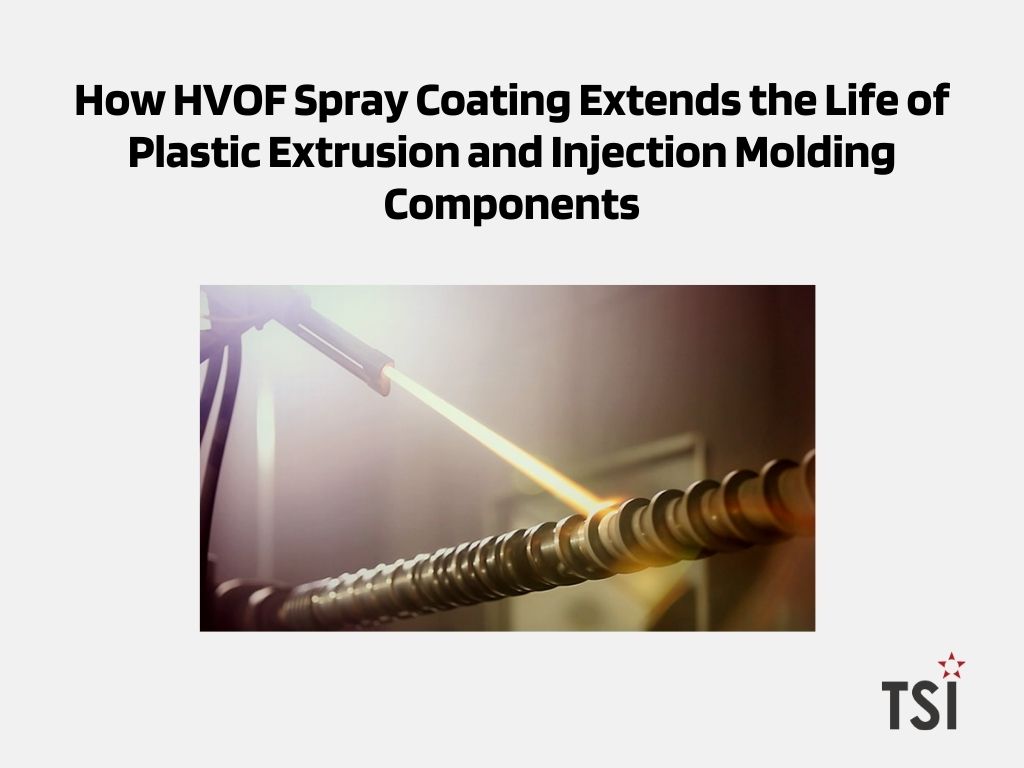
HVOF Spray Coating is an advanced thermal spray process in which coating powder is injected into a high-speed combustion flame and propelled onto a prepared metal surface at extremely high velocity. Upon impact, the particles flatten and bond, forming a dense protective coating layer.
Compared with conventional thermal spray methods, HVOF technology delivers:
-
Higher coating density
-
Stronger adhesion to the substrate
-
Lower porosity
-
Excellent wear and corrosion resistance
These characteristics make HVOF Spray Coating particularly suitable for components exposed to continuous friction, abrasive material flow, and chemically aggressive environments.
Why Plastic Processing Components Need Advanced Surface Protection
In extrusion and injection molding operations, screws and barrels operate under:
-
High temperature
-
High pressure
-
Continuous friction
-
Abrasive fillers (glass fiber, minerals)
-
Corrosive additives (PVC, flame-retardants, recycled materials)
Over time, these conditions lead to:
-
Screw flight wear
-
Barrel inner surface erosion
-
Unstable material conveying
-
Melt inconsistency
-
Reduced production efficiency
Once wear progresses, product quality declines and unplanned shutdowns become unavoidable.
Applying HVOF Spray Coating to working surfaces helps prevent these failure modes by forming a durable barrier between the base metal and harsh processing environments.
How HVOF Coatings Improve Screw and Barrel Performance
1. Enhanced Abrasion Resistance
Glass fiber and mineral-filled plastics continuously grind against metal surfaces during plasticizing. HVOF-applied wear-resistant coatings significantly reduce abrasive wear, preserving screw geometry and barrel inner surface stability for extended operating periods.
2. Improved Corrosion Protection
Many polymers release corrosive byproducts at high processing temperatures. HVOF coatings provide a chemically stable surface that resists oxidation and chemical attack, slowing surface degradation under aggressive operating conditions.
3. Strong Bonding and Coating Stability
HVOF Spray Coating forms a dense, strongly bonded layer that resists peeling or cracking under thermal cycling and mechanical stress. This ensures reliable long-term protection during continuous production.
4. Longer Component Lifespan
By reducing wear progression, HVOF-treated screws and barrels maintain stable plasticizing performance over extended service intervals. This results in:
-
Fewer component replacements
-
Reduced maintenance downtime
-
Lower total operating costs
Common Applications in Plastic Processing
HVOF Spray Coating is commonly applied to:
-
Plastic extrusion screws
-
Injection molding screws
-
Barrel inner surfaces
-
Mixing and metering zones
-
High-wear processing sections
It is particularly beneficial when processing:
-
Glass-fiber reinforced plastics
-
Mineral-filled compounds
-
Flame-retardant materials
-
Recycled plastics with contaminants
Integrating HVOF Coating with Advanced Component Design
Surface coating alone is not the only factor influencing processing performance. Optimal results come from combining:
-
Precision component design
-
High-quality base materials
-
Specialized surface engineering
-
Application-matched geometry
When these elements work together, plasticizing stability improves, resin degradation decreases, and product quality remains consistent throughout long production runs.
TSI’s Manufacturing Approach to Durable Plastic Processing Components
To meet the increasing demands of high-performance plastic processing, Tan Star Industries (TSI) integrates advanced surface engineering technologies — including HVOF (High Velocity Oxygen Fuel) Spray Coating — into its comprehensive manufacturing solutions. HVOF is an advanced thermal spray method designed to produce dense, strongly bonded coatings with excellent wear and corrosion resistance, helping extend the service life of screws, barrels, and other critical components operating in harsh environments.
Unlike conventional surface treatments, HVOF Spray Coating delivers low-porosity, high-adhesion protective layers that significantly enhance resistance to abrasive fillers, high-temperature oxidation, and corrosive media. These properties are particularly beneficial for plastic extrusion and injection molding components — including screws, barrels, feed sections, and wear zones — that experience continuous friction and material stress.
By combining precision component design, high-quality base materials, and targeted surface engineering such as HVOF coatings, TSI helps manufacturers achieve longer component life, more stable processing performance, and reduced maintenance costs. With this integrated approach, TSI’s customers can maintain high productivity and consistent product quality even under demanding polymer processing conditions.
Future Trends: HVOF as a Key Surface Engineering Technology
As plastic materials evolve toward higher strength, higher filler content, and increased use of recycled formulations, component wear challenges will continue to intensify.
HVOF Spray Coating is increasingly recognized as a critical surface protection technology that enables manufacturers to:
-
Process advanced materials reliably
-
Maintain high production output
-
Improve equipment lifetime
-
Reduce total cost of ownership
Conclusion — A Strategic Upgrade for Long-Term Productivity
In plastic extrusion and injection molding, equipment durability directly affects production efficiency and product consistency. Standard metal surfaces alone are no longer sufficient for today’s abrasive and chemically demanding materials.
HVOF Spray Coating provides a powerful solution — strengthening screws and barrels against wear and corrosion while supporting stable, high-quality plasticizing performance.
For manufacturers seeking to extend component lifespan and improve processing reliability, integrating HVOF-coated components into production lines is a forward-looking investment in long-term productivity.
Looking to enhance your plastic processing equipment performance?
Contact Tan Star Industries (TSI) to explore durable component solutions designed for modern plastic manufacturing.