
The Core of Injection Molding: The Importance of Screw Design
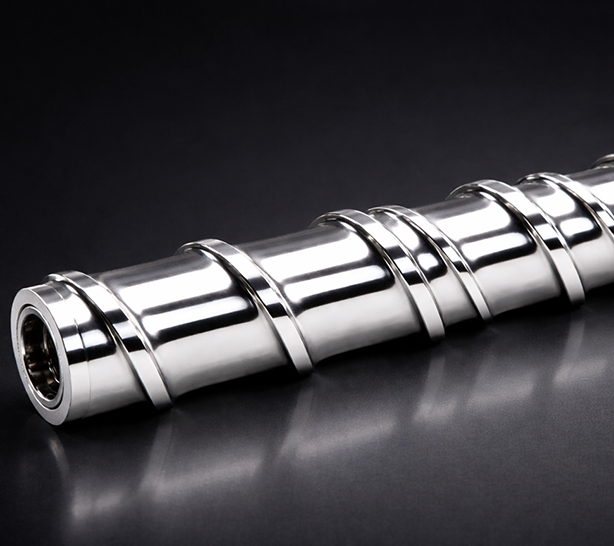
The Core of Injection Molding: The Importance of Screw Design
Integrating Professional Engineering with Half a Century of Expertise for High-Performance Plasticizing Solutions
In the plastic processing industry, the screw of an injection molding machine is often referred to as the "heart" of the equipment. An excellent screw design not only determines production efficiency but also directly impacts the quality of the final product. From commodity plastics to advanced engineering resins, the quality of screw design is a key driver of corporate competitiveness.
1. Plasticizing Quality and Uniformity: The Foundation of the Product
The primary function of the screw is to transform solid plastic pellets into a uniform molten state. A well-designed screw ensures:
-
Uniform Heat Distribution: Through a balance of shear heat and heater band energy, it prevents localized overheating (yellowing) or "unmelted" material.
-
Superior Mixing Performance: Especially when adding color masterbatches or additives, specialized barrier or mixing designs ensure high consistency in color and properties.
2. Productivity and Efficiency: Optimizing Recovery Time
The geometric design of the screw is directly related to recovery time (charging time):
-
Conveying Efficiency: The depth and pitch of the feeding zone determine the intake speed of the plastic. Improper design can lead to feeding issues and prolong the molding cycle.
-
Pressure Stability: An appropriate compression ratio ensures sufficient and stable melt pressure for injection, reducing issues like shrinkage or short shots.
3. Precision Adaptation to Material Characteristics
Different plastics have vastly different requirements for screw design. For instance, high-viscosity materials (like PC) require shallower channels to reduce shear heat, while glass-fiber-reinforced materials rely heavily on wear-resistant designs. Without targeted design, manufacturers face low yields and significantly shortened screw lifespans.
Conclusion: TSI's Professional Solutions
Screw design is a precise combination of mechanical geometry and rheology. A tailor-made screw can significantly:
-
Reduce Scrappage: Solve issues such as black spots, bubbles, color streaks, and flow marks.
-
Shorten Cycle Times: Optimize feeding efficiency and increase dosing speeds.
-
Enhance Product Strength: Ensure molecular chains are not damaged by excessive shearing.
Tan Star possesses over 50 years of experience in screw design. This profound technical foundation allows us to provide more than just components—we provide comprehensive solutions. Facing increasingly diverse engineering plastics and complex process requirements, we leverage our half-century database to accurately diagnose production pain points and find the most suitable screw geometry and material pairing for every customer.